
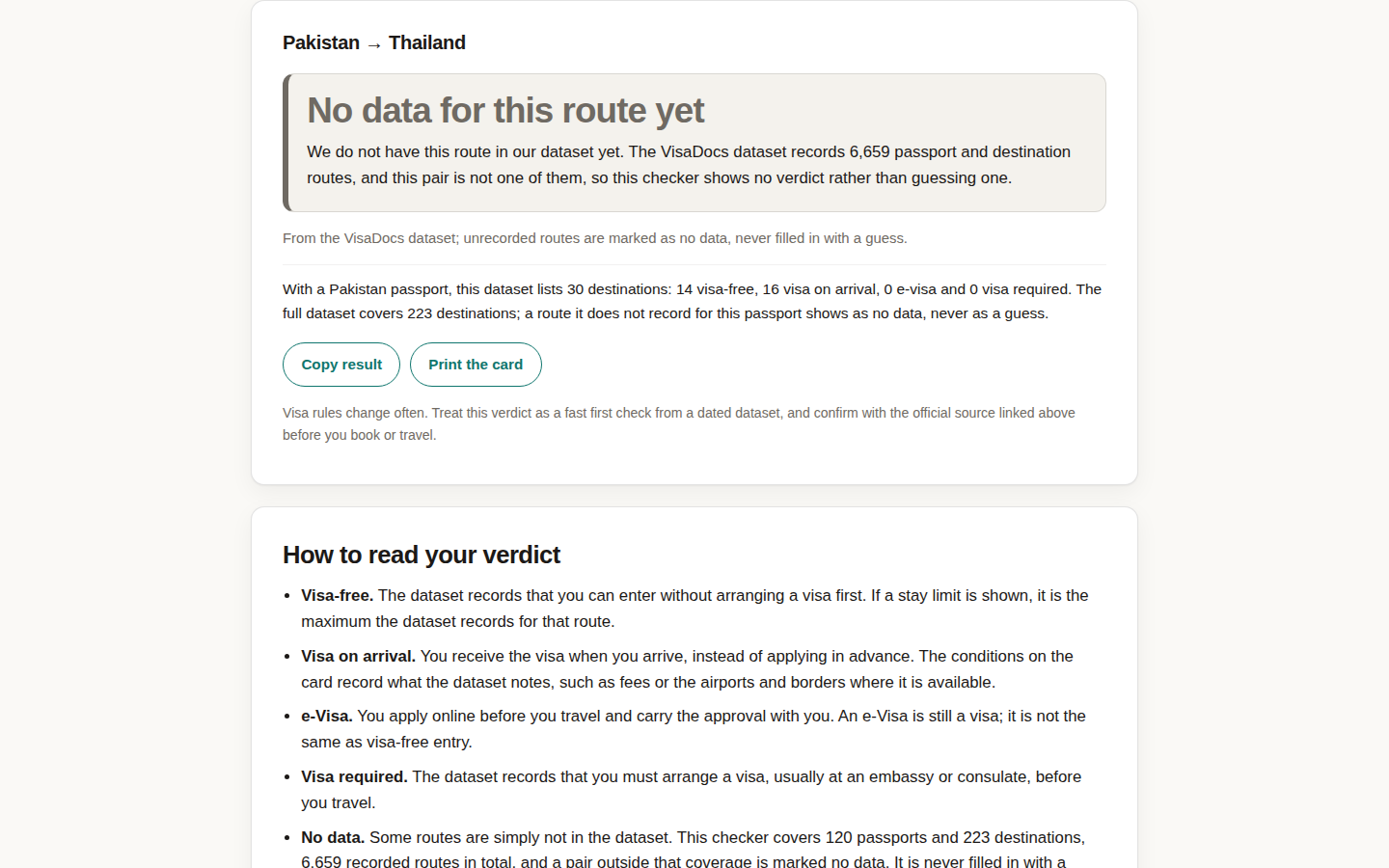
Here is a real run. Pakistan passport, Thailand destination, in the free Can I Go? Checker. The verdict card came back: no data for this route yet. The VisaDocs dataset records 6,659 routes, and this pair is not one of them, so the checker shows no verdict rather than inventing one.
That sounds like a failure. It is the opposite, and it is the first of seven ways to use this tool well. The same card still tells you plenty: with a Pakistan passport, the dataset lists 30 destinations, 14 visa-free and 16 visa on arrival. Here is how to work with answers like that.
1. Screen a shortlist before you compare prices
Run each destination you are choosing between before opening a single flight tab. A visa-free or on-arrival verdict keeps a destination in play; a visa required verdict adds weeks of lead time. The Pakistani passport list on this site is the reading version of the same data.
2. Treat no data as a flag, not a no
No data means the route is unrecorded, not forbidden. It is your cue to go to the official source before booking: for Thailand that is the official Thai e-Visa site. A checker that admits its gaps is safer than one that fills them with confident guesses.
3. Read the passport summary, not just the pair
Every verdict card restates what your passport can do overall. Thirty recorded destinations for Pakistan is a planning list in itself: pick from the 14 visa-free first when dates are tight. For the bigger picture, see what passport rankings actually measure.
4. Check the transit country as well
A legal destination does not help if your connection needs a transit visa. Run the layover country through the checker too, then stress-test the connection itself with the Layover Gauntlet on our sister site.
5. If it says visa required, start the paper trail early
That verdict is a schedule, not a dead end. Get the photo right first with the Visa Photo Maker, and students facing an interview can rehearse with the Visa Interview Simulator.
6. Print the card into your travel file
Copy result or Print the card saves the verdict with its dataset note. If an airline desk agent questions your route at check-in, a printed card is a calmer starting point than a phone search.
7. Re-run the check before you pay
Visa rules change often, and the checker is a fast first check from a dated dataset, not a guarantee. Run the Can I Go? Checker once when you shortlist and once more on booking day. Two checks a day are free, which covers exactly that rhythm. New to the tool? The short explainer walks through the five verdicts first.